Common to Legendary: How Rarity Works
Diamonds, colors, XP: what's behind the five tiers – and why Legendary stays rare.
 AI illustration
Each of the 425 species in the MarineDex has a tier: Common, Uncommon, Rare, Epic or Legendary. You can recognize it by its diamonds and color – and by how much XP a species earns you. Here is what’s behind it.
Five Tiers, Five Colors
AquorDex shows the tier at a glance: Common has one diamond, Legendary has five. Each tier also has its own color – from gray through green, blue and purple to gold.
| Tier | Species | Example |
|---|---|---|
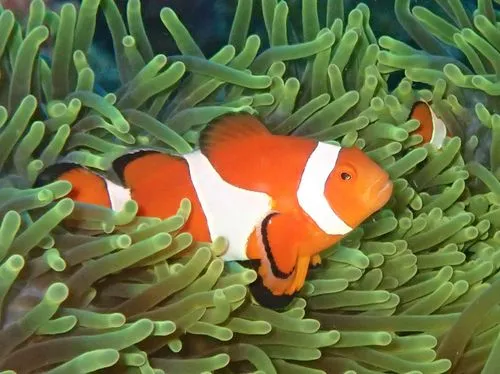
| Common | 288 | Clownfish |
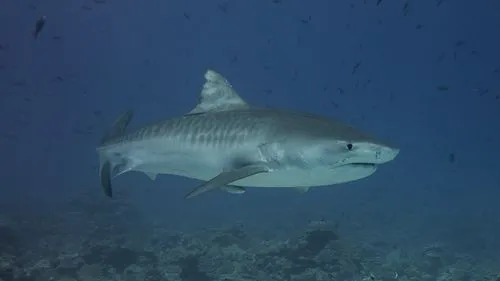
| Uncommon | 62 | Whitetip reef shark |
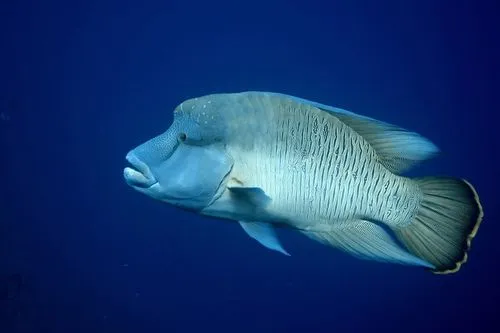
| Rare | 44 | Napoleon wrasse |
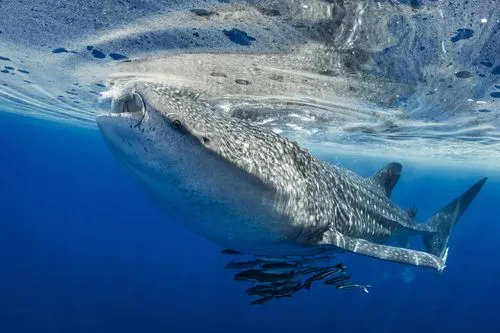
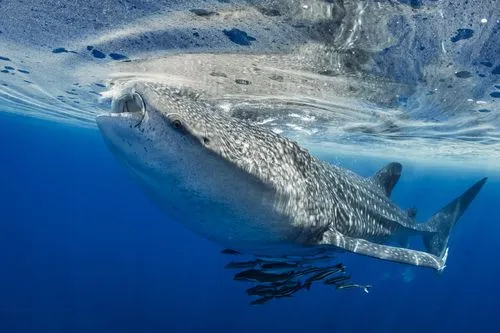
| Epic | 14 | Whale shark |
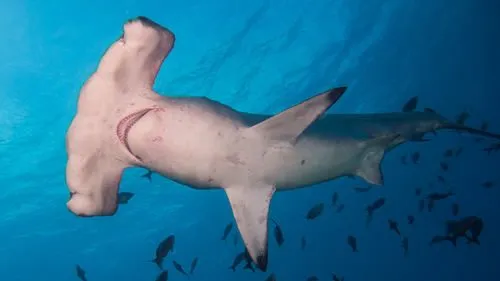
| Legendary | 17 | Great hammerhead |
A good two thirds of all species are Common. Only 17 are Legendary – four percent of the MarineDex. And a small curiosity on the side: there are more Legendary than Epic species.
Where the Tier Comes From
In the MarineDex, rarity is a playful classification – not a statistic about how often a species turns up at a particular reef. For most species, the basis is the IUCN Red List: the more threatened a species, the higher its tier.
- critically endangered (CR) → Legendary
- endangered (EN) → Epic
- vulnerable (VU) → Rare
- near threatened (NT) → Uncommon
- all others → Common
Some species are classified by hand. That is why the tier sometimes differs from the conservation status: the Napoleon wrasse is listed as endangered and is “Rare” in the MarineDex. For the giant squid, the data isn’t even sufficient for a Red List assessment – it is Legendary anyway. Divers practically never encounter it.
So rarity tells you nothing about whether you will see a species on your next dive. At some spots a whitetip reef shark is practically part of the furniture, at others you wait years for one. The tier stays the same.
Rarity, Status, Conservation Status
The species profile shows three details that are easy to mix up. That is why AquorDex deliberately keeps them apart:
- Rarity is the game tier with diamonds and color. It belongs to the species and is the same for everyone.
- Status is your personal progress: Unseen, Spotted, Photographed or Verified.
- Conservation status is the Red List classification, shown as its own abbreviation from LC (least concern) to CR (critically endangered).
The Four Discovery Stages
What you haven’t seen yet lies behind frost in the MarineDex. Name and rarity stay visible – so you always know what you are looking for.
- Unseen: not yet in your MarineDex.
- Spotted: you have seen the species and logged it, usually as a sighting on a dive.
- Photographed: you have attached your own photo to the species.
- Verified: the species has been confirmed from your photo.
How Much XP a Species Earns
The rarer the species, the more XP. And the further you discover it, the more it adds up: your own photo earns one and a half times the XP, a verified species double. All values in XP:
| Tier | Spotted | Photographed | Verified |
|---|---|---|---|
| Common | 10 | 15 | 20 |
| Uncommon | 20 | 30 | 40 |
| Rare | 40 | 60 | 80 |
| Epic | 80 | 120 | 160 |
| Legendary | 150 | 225 | 300 |
Species XP is awarded once per species, not per sighting. If you see the same whale shark five days in a row, it counts once for the MarineDex. The dives themselves still earn you 50 XP every time. On top of that come 100 XP for each new country, 25 XP per spot and 5 XP per photo in the log.
A worked example: you meet a whale shark for the first time and later attach your photo to the species. The dive earns 50 XP, the photographed whale shark as an Epic species 120 XP. If it was your first dive at that spot, 25 XP are added – 195 XP in total. After saving, AquorDex shows you exactly that: new species, XP and a possible level-up.
And then there are the 79 badges in 9 series, from Bronze to Gold. They reward what builds up over many dives.
Why Legendary Stays Rare
Rarity can’t be shortcut in AquorDex. A species’ tier is fixed: it doesn’t drop because many divers have already seen the species, and it doesn’t rise because you have been searching for it for a long time. No species can be bought. You unlock it by seeing it.
And because the tier of most species comes from the Red List, there is something else behind the gold: nine of the 17 Legendary species are classified as critically endangered, including the great hammerhead. An encounter with them is not only rare, but precious.
That is why, especially with Legendary species, the rule is: keep your distance, don’t crowd them, don’t chase them – not even for the photo that lifts the species to “Photographed”. More on this in Don’t Touch: What Venomous Animals Teach Us About Keeping Your Distance.